What is Centralised Grant Verification System for SASSA & Beneficiaries
Over the years, SASSA has faced ongoing challenges around verification. Identity checks, income validation, and eligibility confirmation have often relied on data coming from different systems at different times. This has sometimes resulted in delays, repeated checks, or status outcomes that change unexpectedly.
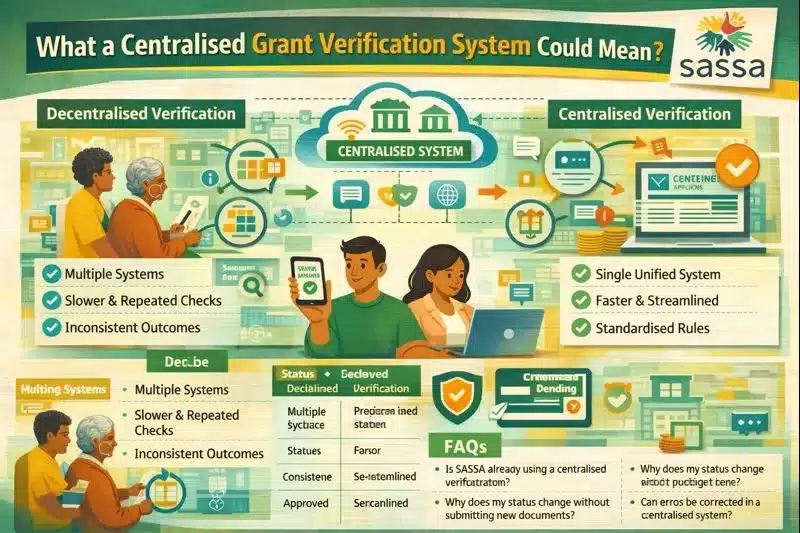
Recent patterns suggest that SASSA is moving toward a more centralised grant verification system. While no formal announcement may define it as such, the way data is increasingly shared, reviewed, and updated points in that direction. Understanding what a centralised verification system means can help beneficiaries better interpret how decisions are made and why outcomes may feel more system-driven than before.
What Centralised Verification Means
A centralised grant verification system refers to a structure where applicant data is checked, stored, and reviewed through a single, unified framework rather than multiple disconnected processes. Instead of each verification step operating separately, all checks feed into one coordinated system.
This type of system allows SASSA Status Check to assess identity details, income indicators, and eligibility signals together. It reduces duplication and ensures that the same information is used consistently across application reviews, monthly checks, and appeals.
How Verification Worked Before
Previously, verification often happened in stages. Identity confirmation, income checks, and eligibility reviews could occur at different times and sometimes through different channels. When data from one source was delayed or incomplete, the entire process slowed down.
This fragmented approach made it harder to maintain consistency. It also increased the likelihood of repeated verifications, especially when beneficiaries updated their details or submitted appeals.
Why SASSA Is Moving Toward Centralisation
As application volumes grew, fragmented verification became difficult to manage. Centralisation offers practical advantages that align with recent system changes.
Some key reasons include:
- Faster access to updated information
- Reduced duplication of checks
- More consistent status outcomes
- Improved monitoring of eligibility over time
These benefits help explain why verification processes appear more integrated than before.
Decentralised vs Centralised Verification
| Aspect | Decentralised Verification | Centralised Verification |
|---|---|---|
| Data handling | Multiple systems | Single unified system |
| Processing speed | Slower | Faster |
| Consistency | Varies | Standardised |
| Re-verification | Repeated | Streamlined |
| Error resolution | Delayed | More controlled |
This comparison shows why centralisation is becoming more practical for a national grant system.
How Centralised Verification Affects Status Outcomes
With centralised verification, SASSA status outcomes are more closely linked to system-wide data rather than individual submissions alone. When information changes in one area, the system can reassess eligibility across the board.
This explains why beneficiaries may see status updates even without submitting new documents. The system continuously aligns available data to eligibility rules, leading to automated updates.
Benefits and Possible Challenges
Centralised systems improve efficiency and oversight, but they are not without limitations. When data from external sources is delayed or inaccurate, outcomes may not reflect a beneficiary’s current situation immediately.
At the same time, centralisation reduces human discretion and applies uniform rules. This can feel restrictive, but it also ensures that decisions are based on the same standards for everyone.
What This Means for Beneficiaries
For beneficiaries, a centralised verification system means that accuracy matters more than ever. Small inconsistencies in personal or financial information can trigger delays or status changes. Regular monitoring and timely updates become essential.
It also means that explanations may be limited, as system-driven outcomes rely on internal rules rather than individual assessments.
What to Expect Going Forward
Looking at recent trends, SASSA appears to be strengthening system integration rather than returning to fragmented checks. Centralised verification supports automation, reduces backlog, and allows ongoing eligibility monitoring.
This suggests that future improvements will likely enhance system coordination rather than expand manual review processes.
FAQs
Final Verdict
A centralised grant verification system represents a logical step in SASSA’s ongoing transformation. While it reduces flexibility in some cases, it improves consistency, efficiency, and control at scale. For beneficiaries, understanding this shift helps explain why outcomes are increasingly system-driven and why accuracy and patience are more important than ever.