How Automation is Being Helpful For SASSA Beneficiaries To Check Status
Many beneficiaries have noticed that SASSA status outcomes now appear faster and more frequently than before. Decisions such as approved, declined, or pending are often reflected without any direct communication from a SASSA official. This shift has raised questions about how decisions are made and why outcomes sometimes change without explanation.
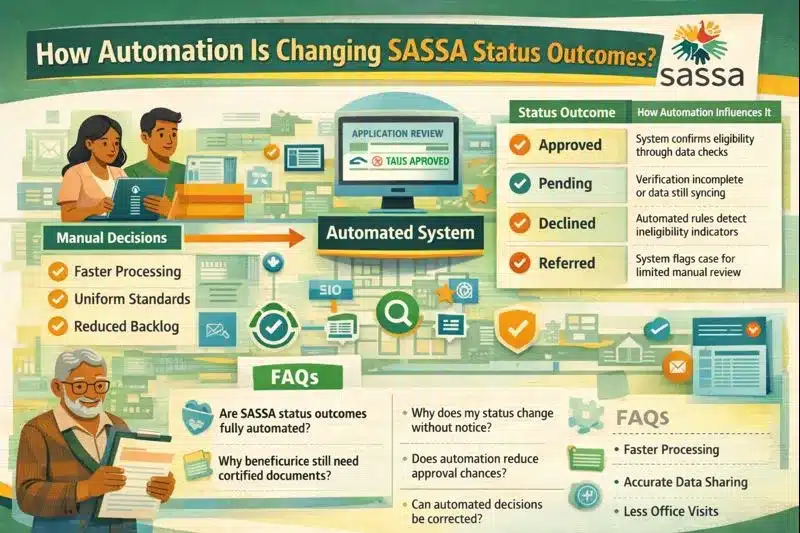
The answer lies largely in automation. Over time, SASSA has introduced systems that automatically evaluate applications and re-check eligibility. These systems now play a major role in determining status outcomes. Understanding how automation works helps beneficiaries better interpret their results and avoid unnecessary confusion.
What Automation Means in the SASSA System
Automation refers to system-driven decision-making where predefined rules assess information without human involvement. Instead of a person reviewing each application, the system checks identity details, income indicators, and eligibility criteria automatically.
This approach allows SASSA to process a large number of applications quickly and consistently. It also explains why status outcomes may update suddenly or repeat across multiple months.
Why SASSA Relies on Automated Status Decisions
Manual decision-making becomes difficult when millions of applications need to be reviewed regularly. Automated systems help manage this scale while maintaining consistent standards.
Key reasons automation is preferred include:
- Faster processing of applications and reviews
- Reduced backlog and waiting times
- Uniform application of eligibility rules
- Lower dependency on regional office capacity
These factors make automation central to modern grant administration.
How Automation Affects Status Results
| Status Outcome | How Automation Influences It |
|---|---|
| Approved | System confirms eligibility through data checks |
| Pending | Verification incomplete or data still syncing |
| Declined | Automated rules detect ineligibility indicators |
| Referred | System flags case for limited manual review |
This shows that most outcomes are system-generated rather than individually reviewed.
Why Status Outcomes May Change Automatically
One common concern is why a SASSA status changes without the beneficiary submitting new information. Automated systems continuously reassess data. If updated information becomes available or discrepancies are resolved, the system may update the status accordingly.
This means outcomes are not always final in the short term. Automation allows SASSA to adjust decisions as new data is processed.
Benefits and Limitations of Automated Decisions
Automation brings efficiency and consistency, but it also has limitations. Systems rely on the accuracy of available data. When data is outdated or incomplete, outcomes may not reflect a beneficiary’s actual situation.
At the same time, automation reduces human bias and ensures that the same rules apply to everyone. This balance explains why SASSA continues to expand automated decision-making while keeping limited manual oversight for complex cases.
What Beneficiaries Should Understand
With automation playing a central role, beneficiaries need to view status outcomes as part of an ongoing system process rather than a one-time decision. Regular status checks, accurate personal details, and patience are essential.
Understanding that automation drives outcomes helps reduce frustration and sets realistic expectations.
FAQs
Are SASSA status outcomes fully automated?
Most routine outcomes are automated, but certain cases may still be reviewed manually if flagged by the system.
Why does my status change without notice?
Automated systems update outcomes when new or corrected data becomes available, even if the beneficiary did not submit anything new.
Does automation reduce approval chances?
Automation applies the same rules consistently. It does not target individuals but evaluates eligibility based on available data.
Can automated decisions be corrected?
Yes. If information is incorrect or incomplete, outcomes can change once data is updated or reviewed.
Closing Thoughts
Automation has become a core part of how SASSA determines status outcomes. While it may feel impersonal, it allows the system to function efficiently at scale. For beneficiaries, understanding this shift makes it easier to interpret results and respond appropriately as the system continues to evolve.