Why SASSA Is Ending Application Manual Review & What Replaces Them
For many years, manual review formed the backbone of SASSA’s decision-making process. Applications, appeals, and special cases were often assessed by human officials who reviewed documents and made individual judgments. While this approach allowed flexibility, it also created delays, inconsistencies, and growing pressure on the system.
Recent developments suggest that manual SASSA reviews are gradually being reduced. This does not mean human oversight is disappearing entirely, but it does indicate a shift in how decisions are made. Understanding why this change is happening helps beneficiaries better understand current outcomes and future expectations.
Manual Reviews Meaning
Manual review refers to situations where a SASSA official personally checks an application, supporting documents, or appeal before a decision is made. These reviews were common when application volumes were manageable and systems were less automated.
In practice, manual reviews often resulted in long waiting periods. Decisions depended on staff availability, regional capacity, and the accuracy of submitted documents. This approach also made it difficult to apply the same standards consistently across all cases. If you are already getting the SASSA grant, then you must go through SASSA Status Check to check whether your grant is pending, approved or declined.
Why Manual Reviews Are Becoming Less Common
As application numbers increased, manual processing became harder to sustain. Delays grew, backlogs expanded, and beneficiaries experienced long periods without feedback. Over time, SASSA introduced automated verification to reduce these pressures.
Several practical reasons explain this shift:
- Automated systems can process large volumes faster
- Digital verification reduces human error
- Standardised rules create more consistent outcomes
- Operational costs are lower compared to manual handling
These factors make automation more suitable for a large national grant system.
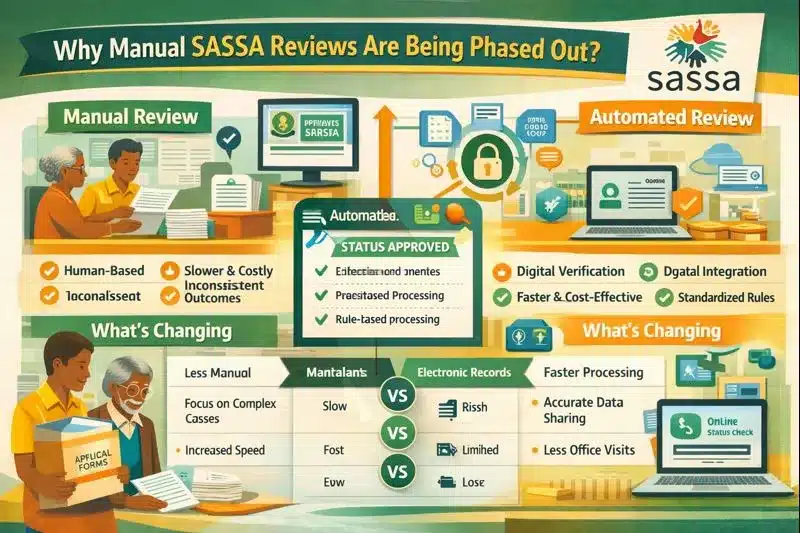
Manual vs Automated Review: Key Differences
| Aspect | Manual Review | Automated Review |
|---|---|---|
| Processing speed | Slow | Fast |
| Human involvement | High | Limited |
| Consistency | Varies by reviewer | Standardised |
| Scalability | Low | High |
| Error handling | Case-by-case | Rule-based |
This comparison shows why automation is becoming the preferred method for routine decisions.
What Has Replaced Manual Reviews
Manual reviews are not being removed without replacement. Instead, they are being reserved for specific situations where automation cannot provide clear answers. Most initial checks now rely on digital verification systems that assess identity, income indicators, and eligibility rules automatically.
Manual involvement typically happens only when:
- Data conflicts appear
- Verification systems cannot confirm information
- Appeals require additional assessment
This allows human reviewers to focus on complex cases rather than routine applications.
How This Affects Beneficiaries
For beneficiaries, fewer manual reviews mean faster outcomes in most cases. Status updates are often generated automatically, which explains why decisions sometimes appear without direct communication or explanation.
However, this also means that beneficiaries must ensure their information is accurate and up to date. Automated systems rely heavily on data consistency. Incorrect details can lead to delays or negative outcomes that may take time to correct.
Why This Change Is Likely to Continue
Looking at previous changes, SASSA has consistently moved toward systems that reduce manual workload. Each update appears designed to increase efficiency and control rather than expand human processing.
This pattern suggests that manual reviews will remain limited to exceptional cases, while automation continues to handle the majority of decisions. The goal is not to remove human oversight, but to use it more selectively.
What Beneficiaries Should Expect Going Forward
As manual reviews become less central, beneficiaries may notice:
- Faster status updates
- Fewer personalised explanations
- Greater reliance on digital status checks
- More importance placed on accurate data
Understanding this shift helps manage expectations and reduces confusion when outcomes appear system-driven.
Final Verdict
The gradual phasing out of manual SASSA reviews reflects a broader effort to modernise grant administration. While this change can feel impersonal, it aims to create a system that is faster, more consistent, and easier to manage at scale. For beneficiaries, adapting to this reality means engaging with the system as it is evolving, not as it once was.